A product of my own
I built a product on my own, and shipped it.
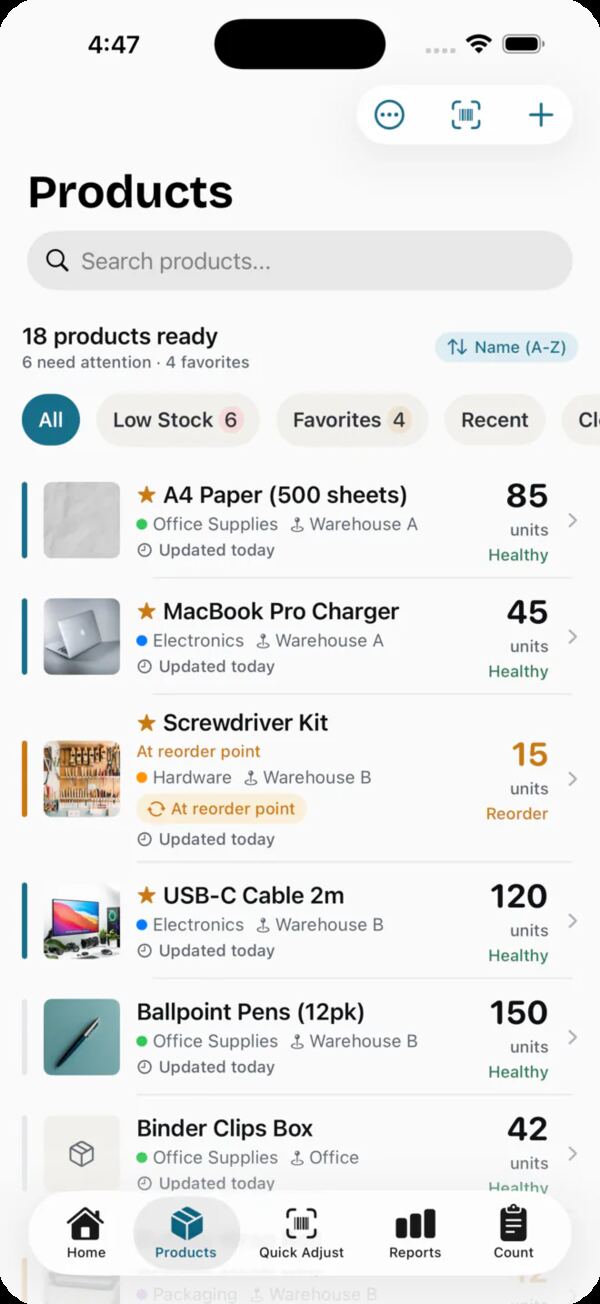
Magpie is a native iOS inventory app for small businesses. I designed it, built it, launched it, and still support it. Here is the honest version of what that involved.
If you have ever thought about building something of your own, the part you can picture is the building. That part I knew how to do. It was everything around it that I had never done before.
The idea was small on purpose
Small businesses need to know what they have, where it is, and what needs attention. Most inventory software answers that by being enormous. I wanted something you could open, check a number, and close.
So Magpie does quick stock checks, clear locations and categories, and flags items that have fallen below their reorder point. Native iOS, built with SwiftUI on Core Data and CloudKit. Your data stays yours.
Choosing what to leave out was harder than choosing what to build. Every feature I skipped was a small argument with myself about whether the thing would look unfinished.
One person is every department
I conceived it, designed it, wrote it, drew the icon, wrote the App Store copy, shipped it, and answer the support email. That sounds impressive written down. In practice it means the work you are worst at is nobody else’s job.
I am a software engineer, so the engineering was the comfortable part. Positioning, pricing, screenshots, and the store listing were not. I spent more time on a product page than on some of the features behind it, and I still do not know if I got it right.
Shipping is not the finish line
Magpie is on the App Store and I keep building it. That is real, and I am glad I did it.
It also did not settle the question I actually care about, which is whether it can become a business. Getting software to work and getting people to pay for it are different problems, and being good at the first one does not carry you through the second. I wrote about that more directly in the publication.
That gap is the thing I most wish someone had told me plainly before I started. Not to discourage anyone — I would do it again — but because the story usually gets told as though launching is the hard part, and then the hard part starts.
If you are weighing up something similar
Build the smallest version you would still be proud of. Expect the non-engineering work to take longer than the engineering. And decide in advance what “this is working” would actually look like, because without that you will keep shipping features instead of answering the question.